The Art of Governing
If you ask ChatGPT impartially about associations with the term „Smart Governance” and request a satirical description, you might get the following suggestion:
„Smart Governance is the visionary concept that makes us believe we live in a perfect symbiosis of technology and administration, while in reality we are trapped by an invisible web of algorithms, data streams and bureaucratic surveillance. Imagine a world in which your decisions are no longer made by you, but by an AI that knows exactly what you want – before you do.
In the era of smart governance, friendly, omniscient AIs monitor your every move. These well-meaning digital shepherds are always ready to tell you when it’s time to get up, when you should go to work and whether your jogging route is particularly efficient today – all in the name of your productivity and health, of course.
Forget the freedom to make spontaneous decisions. Your to-do list is maintained by an almighty algorithm that optimizes every aspect of your life. Why think about what you want for dinner when smart governance has already calculated the perfect meal plan for you?
In this utopian world of smart governance, there are no secrets. Your data is openly accessible because transparency is key. From your financial transactions to your latest doctor visits, everything is public to ensure everyone is on the same page. After all, why would anyone have anything to hide?
Your behavior is constantly corrected by subtle hints (nudges). Do you want to eat the last chocolate in the cupboard? A gentle hint on your smartphone will alert you to the fact that you have already reached your calorie limit. In this way, you learn to always make the „right” decisions without the burden of thinking.
Your opinion counts – at least in theory. Automated systems take the effort out of voting by deciding on the basis of your previous preferences. After all, the AI has a better understanding of your needs and wishes than you do.
Smart governance is the triumphant evolution of the transparent citizen, in which you no longer have to worry about making your own decisions. In this satirical vision of the future, you are no longer the master of yourself, but a well-supervised subject in a perfectly organized digital paradise. All for the higher goal of efficiency and optimization – welcome to the smart world of tomorrow!“
Before we dive into the wonderful world of smart governments, let’s first clarify the basic terms. And don’t worry, it won’t be as complicated as a politician trying to answer a simple question!
The term „smart” has undergone a fascinating development. It originally comes from the Old English „smeart” and meant something like „painful” or „stinging”. Yes, you read that right – if you were stung by a wasp back then, you would have said: „That was smart!” Nowadays, however, „smart” means something completely different. It stands for cleverness, efficiency and technology – much like your smartphone, which is smarter than some politicians!
Let’s move on to the next term ‚governance‘. This comes from the Latin and means something like ’steering‘ or ‚directing‘. It is therefore about the art and science of leading a society, making decisions and maintaining order. Think of governance as a big chess game in which the citizens are the pawns – but without the risk of someone having to sacrifice the pawns.
But how does simple Governance become Smart Governance? It’s quite simple: you add technology, data analysis, and a dash of innovation. The result is a government that reacts faster, is better informed, and even reads your emails—well, of course, only in the best sense! In the world of Smart Governance, the classic question „Who rules the world?” magically transforms into „Who is the smartest in the room?”.
Governance and Smart Governance are like siblings fighting over the remote control – only this one is about control over entire nations! But let’s not forget what really binds these two siblings together: Power. Power to make decisions, power to change things, and power to decide who orders the pizza at the next cabinet meeting.
Governance and Smart Governance are the frameworks through which power is exercised, controlled, and legitimized—much like the invisible wizard behind the scenes who rules the political stage. But what does power actually mean?
Power is a fascinating force that operates within the social relationships and structures of our world. It refers to the ability of a person or group to influence or control the behavior, decisions or actions of others. Whether in politics, business, society or on a personal level, power manifests itself in many different ways and shapes our daily lives.
From political authority and social prestige to economic influence, power takes various forms and dimensions that are intertwined and shape our world in complex ways. It can be both obvious and direct as well as subtle and indirect, and it is often unevenly distributed, leading to tensions, injustice, or even conflicts.
„The feeling of having no power over people and events is generally unbearable to us. When we feel helpless, we feel miserable. No one wants less power; everyone wants more. In the world today, however, it is dangerous to seem too power hungry, to be overt with your power moves. We have to seem fair and decent. So, we need to be subdecongenial yet cunning, democratic yet devious.“
Robert Greene, POWER – The 48 Laws of Power
The urge for power is a fundamental human need. However, in a world characterized by democratic principles and human rights, the direct and overt exercise of power is often unacceptable. Instead, it requires subtle strategies and tactics to gain and maintain power while maintaining an image of fairness and decency. In a world characterized by increasing transparency and the pursuit of justice, the ability to exercise power in smart and skillful ways is critical to achieving long-term goals and bringing about change. This does not mean that ’smart governance‘ should be manipulative or unethical. On the contrary, it requires a balanced understanding of ethical boundaries and a careful balance between power and responsibility.
Michel Foucault, a significant thinker in the analysis of power structures, emphasized the ubiquity of power in social structures and interactions. He argued that power is not only exercised from top to bottom but also comes from various directions and levels. This perspective highlights the complexity and multifaceted nature of power relations and reminds us that power is not confined to specific institutions or individuals but is present in the smallest and most everyday interactions.
„Power is everywhere: not that it engulfs everything, but that it comes from everywhere.“
Michel Foucault, The History of Sexuality
Foucault’s ideas emphasize the importance of a comprehensive understanding of power and demonstrate that power is not only exercised through overt confrontation or visible authority but also through subtle mechanisms of normalization, discipline, and surveillance. In a world where power often operates behind the scenes, it is crucial to recognize and critically examine these hidden dynamics to achieve a more just and balanced power relationship.
In the upcoming chapters, we will first turn our attention to the theoretical foundations of power in a society and analyze its relationship with Governance and Smart Governance. We will explore how power structures are organized both formally and informally and how they are exercised through various mechanisms—political, economic, and social.
Subsequently, we will examine concrete examples such as the COVID-19 policy and the One-Health approach to illustrate different forms of governance.
Furthermore, we will highlight some key technological pillars of Smart Governance and provide an outlook on the future of this development.
Through this in-depth analysis and investigation, we aim to foster a deeper understanding of the dynamics of Power, Governance, and Smart Governance, and encourage readers to critically reflect on the ways in which power is exercised and directed in our modern world.
1. Governmentality – The Visible and Invisible Threads of Power
1.1. The Link between Knowledge and Power
1.2. Biopolitics
1.3. Dispositives of Power
1.4. Disciplinary Power
1.5. Technologies of the Self
1.6. Resistance and Counterpower
1.7. Summary
2. Corona Crisis: Governance and Biopolitics in a State of Emergency
3. One Health Approach – Prevention Through Continuous Governance
4. The Technological Pillars of Smart Governance
4.1. The European Digital ID
4.2. Technological Self-management as the Foundation of Smart Governance
4.3. Digital Twins as the Basis for Smart Governance Strategies
4.4. Intelligent Money – Smart Money and Smart Governance
5. A Glimpse into the Future – Smart Governance at Its Best
6. Smart Resistance
7. Epilogue – Is Smart Governance Truly the Only Option?
1. Governmentality – The Visible and Invisible Threads of Power
In his analysis of forms of governance and ruling in modern societies, Foucault introduces the concept of „Governmentality”. This term combines the words ‚government‘ and ‚mentality,‘ and refers to the ways in which techniques and practices of governance deeply penetrate and influence people’s thinking and behavior.
Foucault argues that governance is not merely a matter of political institutions or state authority but encompasses a complex network of knowledge, measures, and techniques aimed at steering and guiding human behavior. It involves not only the direct exercise of coercion or control but also the construction of specific systems of knowledge, norms, and behaviors that subtly influence individuals.
Governmentality surrounds us like a three-dimensional matrix. It has different faces and sometimes contradictory manifestations, so that we often „can’t see the wood for the trees”. The following classification of its most important aspects can provide a simple orientation aid in this ‚power jungle‘.
1.1. The Link between Knowledge and Power
The phrase „knowledge is power” has established itself over the centuries and is often interpreted to mean that someone with extensive knowledge also possesses significant influence and superiority over others. This notion does not always carry a positive connotation: the more one knows about a person, the more control one can exert over them and exploit their weaknesses.
In Foucault’s analysis, knowledge itself is an instrument of power, operating at both macro and micro levels. It is not neutral but is always intertwined with power processes that profoundly affect social structures and individual lives. Those who possess knowledge or control over it also wield power over others.
Knowledge involves understanding patterns, connections, and meanings. It is created when information is analyzed, linked, and interpreted within a coherent and useful framework. Information arises from data when the latter is placed in context and interpreted. Data, in turn, are raw pieces of information that can be collected.
The sheer volume of available data can certainly expand the possibilities for acquiring knowledge, but simply increasing the amount of data does not automatically lead to more knowledge. Instead, it is crucial how data are collected, analyzed, interpreted, and placed into a useful context. The quality of the data, the methods of analysis, and the ability to synthesize and interpret information meaningfully play a critical role in transforming data into knowledge.
The linking of knowledge and power is a key driving force behind the digitalization of modern societies. Digitization generates, collects and analyses huge amounts of data (Big Data). Big data includes information from various sources such as social media, sensors, transactions, medical records and more. Governments and companies use big data and advanced analytics techniques to collect, analyze and interpret extensive information about the population. This data often includes personal information such as demographics, behavioral patterns, consumer behavior, health data and social interactions.
Artificial intelligence (AI) is increasingly being used to gain insights from these analyses. AI encompasses technologies that enable computers to perform tasks that would normally require human intelligence. Through the use of machine learning (ML), a subfield of AI that focuses on algorithms and models that enable computers to learn from data and make predictions, predictive models are being developed that can forecast future events.
The combination of big data, artificial intelligence (AI) and machine learning (ML) offers governments and companies new tools. They can use them to identify trends, carry out risk assessments and predictive analyses, implement monitoring programs, plan interventions, allocate resources, control social processes, make informed decisions and ultimately exercise power.
The „Link between Knowledge and Power” is ubiquitous and omnipresent.
Governments and businesses use the data they collect to implement surveillance and control mechanisms. This ranges from state surveillance aimed at combating crime and terrorism to corporate use for influencing consumer behavior and securing market share.
Big data analysis and ML can be used to carry out predictive analyses to combat epidemics, control traffic flows or plan urban infrastructure and make political decisions on this basis.
By collecting and analyzing health data (electronic patient records, health apps, genetic data), health authorities and institutions can take more precise and effective measures for preventive and curative healthcare. These measures can also be used to monitor and manage health behavior (e.g. vaccination campaigns, quarantine measures, etc.).
In the education sector, data on student performance and behavior are collected and analyzed to develop educational strategies tailored to the individual needs of students. This not only impacts education policy but also influences the future opportunities and prospects of the students.
Companies use data analysis to increase productivity and efficiency, optimize work processes and monitor and control employee behavior.
Platforms like Facebook, Google, and Amazon collect extensive data on their users and use it to provide personalized content and advertising that influences and directs user behavior. These platforms hold immense power due to the knowledge derived from the data of their billions of users. They can shape public opinion, influence purchasing decisions, and even promote or hinder political movements.
As a central aspect of governmentality, the connection between knowledge and power is put into practice through Smart Governance.
1.2. Biopolitics
A fundamental component of governmentality is biopolitics, which deals with the comprehensive management of the population by state and other institutions. It encompasses many aspects of human behavior and social life. This includes measures related to healthcare, social policy, and demographic statistics, as well as other state interventions that impact the life and well-being of the population. Biopolitics further covers important areas such as reproduction and family policy, nutrition and consumption, education and upbringing, work and employment, environmental protection and sustainability, security and surveillance, migration and citizenship, as well as sexuality and gender politics.
Through the introduction of laws, policies, and standards, biopolitics manages and regulates the life of the entire population in all its aspects. With these comprehensive measures, biopolitics aims to steer the behavior of the population and achieve specific societal goals.
Here are a few specific examples:
In the realm of healthcare, many countries have laws that mandate certain vaccinations to prevent the outbreak and spread of infectious diseases. For example, the Measles Protection Act requires measles vaccinations for children in daycare centers and schools, as well as for employees in medical facilities and community centers.
Other laws and measures serve to control and contain epidemics, such as the Infection Protection Act (IfSG) in Germany. This legislation regulates measures for the prevention and control of infectious diseases in humans, establishing quarantine protocols and reporting requirements.
Through compulsory education, curricula, and educational standards, education systems are used not only to impart knowledge and skills but also to promote social norms and values considered crucial for the stability and progress of society.
Food production guidelines, nutritional standards or programs to combat obesity are used to regulate nutrition and consumption. This allows governments to influence the health and behavior of the population in order to achieve certain health or economic goals.
Through environmental laws and standards, governments can regulate the behavior of individuals and businesses to achieve long-term ecological goals.
Immigration laws can regulate migration and influence the determination of citizenship as well as the demographic composition and cultural dynamics within a state.
Laws concerning equality, LGBT rights, and sexual education, which address sexual orientation and gender identity, have profound impacts on social norms within society.
etc.
Through the advancing digitalization of nearly all aspects of societal life, new terms such as Smart Health, Smart Cities, Smart Economy, etc., are continuously defined. The power generated through knowledge is concretely and perceptibly implemented in daily governance and administration through biopolitical measures.
The realization of biopolitical strategies and goals requires corresponding infrastructure and mechanisms. This brings us to the so-called dispositives of power.
1.3. Dispositives of Power
Dispositives are networks of various elements such as institutions, laws, regulations, administrative measures, and scientific discourses that work together to achieve specific societal goals. These networks create and implement the frameworks within which power is exercised.
Biopolitics operates within and through the dispositives of power. The networks that constitute these dispositives are the structures through which biopolitical strategies are implemented. For instance, biopolitics utilizes institutions such as hospitals, social services, schools, media, businesses across various industries, and prisons—all of which are components of the dispositives of power.
Dispositives of power represent the means and mechanisms through which biopolitical measures are coordinated and implemented. A dispositif for public health, for example, might include hospitals, health laws, vaccination campaigns, and medical research, all working together to achieve the health objectives of biopolitics.
Dispositives of power enable the normalization and control of populations. Biopolitics aims to promote certain norms and behaviors, and the dispositives create the frameworks within which these norms and behaviors are established as „normal” and „desirable”. Dispositives integrate various elements of society and create an environment in which certain behaviors are encouraged while others are discouraged.
This shapes and directs people’s behavior in subtle and often invisible ways. Instead of overt coercive measures, the dispositives use knowledge systems, discourses and institutional practices to influence people’s behavior.
The practical implementation is usually as follows:
Carefully organized collections of knowledge and information, such as scientific studies and news reports, can provide the foundations upon which people base their views and decisions. (When people are informed through scientific studies that vaccinations can prevent diseases, they are more likely to be willing to get vaccinated.)
These can be combined with conversations and discussions in society about specific topics. These conversations take place in the media, in politics and in everyday life. These discourses shape people’s opinions and attitudes. (The way the media presents issues influences public opinion. When the media frequently report on the dangers of climate change, public awareness increases and people are more willing to make environmentally friendly decisions, such as reducing plastic waste or using public transportation.)
In most cases, these actions lead to the introduction of rules and norms to which people must adhere. (By implementing vaccination programs and preventive health check-ups in hospitals and clinics, the population is regularly encouraged to undergo check-ups and vaccinations.)
Smart governance can be seen as a modern expression of the dispositives of power that extends and deepens traditional concepts of regulation, standardization and surveillance through state-of-the-art technologies and data analysis.
A dispositive can include disciplinary power as one of the methods of exercising power.
1.4. Disciplinary Power
While biopolitics focuses on the management of populations, disciplinary power focuses on the regulation of individuals. Both forms of power aim to control and optimize people’s behavior. While biopolitics operates at the macro level by regulating the conditions and circumstances of the entire population, disciplinary power intervenes at the micro level by shaping the bodies and behaviors of individuals. Both forms of power complement each other and create a comprehensive system of social control.
Disciplinary power is exercised through surveillance, standardization, punishment and reward, education and training. It aims to discipline individuals, standardize their bodies and behaviors and make them productive.
Most of you will likely first think of prisons and penal systems. Indeed, the criminal justice system in democratic societies relies on disciplinary power to sanction and correct deviant behavior. Prisons and correctional facilities are institutions where surveillance, punishment, and rehabilitation play a central role.
However, most of us encounter disciplinary power much more frequently than we might realize.
Schools are a classic example of institutions that exercise disciplinary power. Through curricula, class rules, exams and monitoring systems, students are encouraged to behave according to norms and achieve certain performance standards.
Employers use disciplinary power to control and direct the behavior of their employees. Through employment contracts, employee appraisals, workplace monitoring and reward/punishment systems, employers can influence the productivity and compliance of their employees.
In democratic societies, various social control mechanisms exercise disciplinary power. These include social norms, moral expectations, cultural values, and peer pressure, which influence and regulate people’s behavior. Peer pressure refers to the influence that peers can exert on a person’s behavior, attitudes or decisions. This influence arises from the desire to be accepted, liked or respected by the group.
The media also play a crucial role in exercising disciplinary power. Through targeted reporting, advertising, and entertainment formats, they can propagate, promote, and support certain norms, values, and behaviors, thereby steering moral expectations or peer pressure on individuals in one direction or another.
Finally, it is important to recognize that the system of punishment and reward affects psychological behavior. It transforms the rules of the system from something one must follow to something one wants to follow because it is in one’s own interest. This philosophy underpins „technologies of self-management”, which rely on motivational systems to encourage desired behavior. By skillfully combining positive and negative incentives, these technologies help individuals to self-regulate and achieve personal as well as societal goals.
1.5. Technologies of the Self
Technologies of self-management, or „Technologies of The Self”, refer to the methods and practices individuals use to regulate, shape, and control themselves. This can involve self-discipline, reflection, self-improvement, and other personal strategies aimed at meeting specific norms.
The legal and normative frameworks established by ‚biopolitics‘ and ‚dispositives of power‘ for collective governance and regulation influence individual behavior and self-image. Through technologies of the self, people internalize these norms, voluntarily and consciously adapting their behavior because they perceive the rules as useful and beneficial for themselves.
Fitness apps rely on positive reinforcement through rewards and challenges to motivate users to exercise regularly. Learning platforms offer rewards for completing modules or passing tests, increasing motivation to keep learning. Financial apps offer incentives for sticking to budgets and saving money, while highlighting negative consequences for overspending. Self-management methods such as the Eisenhower Principle or the Pomodoro Technique encourage people to use their time efficiently and focus on important tasks.
In this way, external directives become internal motivations.
1.6. Resistance and Counterpower
Some of you may be irritated or disturbed by the theoretical classification of the most important aspects of governmentality. But according to Foucault, power and resistance are closely linked. Where there is power, there is also the possibility of resistance. Resistance does not arise from outside or independently of power, but is part of the relationship between the actors of power themselves.
„Where there is power, there is resistance, and yet, or rather consequently, this resistance is never in a position of exteriority in relation to power.“
In Defence of Foucault: The Incessancy of Resistance
Power relations can only exist if there are points of resistance that oppose them. Resistance is always a part of the network of power, serving as an adversary, target, support, or entry point for power. There is not just one grand locus of resistance, but many individual resistances, which do not necessarily overcome power in its entirety. Thus, wherever there is power, the possibility of resistance exists. Resistance does not come before or after power; rather, both exist simultaneously and condition each other.
These considerations reflect the dynamic between conformity and non-conformity in society. It illustrates that a small group of non-conforming individuals plays a significant role in promoting change and innovation, while the conforming majority contributes to stability and order.
Conformity and non-conformity are not rigid categories, but rather dynamic concepts that depend heavily on the social context and individual circumstances. What is considered conforming or non-conforming in one situation may be different in another. These concepts exist on a continuum, and a person’s behavior can move between these two poles depending on the circumstances.
Foucault viewed resistance as specific struggles against the everyday applications of power, rather than a struggle against the existence of power itself. Since power relations are deeply embedded in social structures and cannot be simply eradicated, they cannot be radically abolished. Resistance, therefore, manifests in various forms and practices that challenge and negotiate the ways power is exercised and experienced, rather than aiming to eliminate power entirely.
The interaction between governance and resistance is a dynamic and complex process that takes place in various ways.
When governments encounter resistance, they can compromise or make concessions to make their measures more acceptable and reduce resistance. By involving the leaders of the resistance or including certain demands in their programs, governments can not only mitigate the resistance but also integrate it into their own strategy.
Governments can use certain discourses to present their measures as necessary or beneficial in order to increase acceptance among the population. At the same time, they can portray resistance movements as illegitimate, irrational or dangerous in order to reduce their influence.
Modern technologies such as Big Data, Artificial Intelligence (AI) and Machine Learning (ML) offer governments new opportunities to monitor and analyze resistance. By analyzing data, they can identify potential resistance movements at an early stage and react accordingly. Using predictive models, governments can predict potential resistance patterns and take proactive measures.
Resistance and counterpower function as feedback mechanisms within power structures. They indicate to governments and institutions where tensions and discontent exist and can lead to adjustments in governance strategies. Persistent and significant resistance can compel governments to implement political reforms or reconsider existing measures. Resistance movements can initiate important public debates, contributing to the formation of new norms and values, which then influence governance strategies.
The constant interaction between power and resistance can lead to the emergence of new power relations and to the further development and change of government practices and technologies.
1.7. Summary
By taking a closer look at Foucault’s idea of governmentality, one can better understand how power functions in a society and how it influences governmental structures. This helps to recognize and examine the complicated and diverse mechanisms of governance.
While governmentality analyzes the theoretical aspects of power in a society, governance concerns the concrete methods and processes that apply and manage this power in practice. Smart governance is a further development of governance that uses modern technologies and digital possibilities to meet current requirements.
2. Corona Crisis: Governance and Biopolitics in a State of Emergency
Global crises often present governments with enormous challenges that require a swift and well-coordinated response. In such situations, the importance of smart governance becomes particularly evident.
An outstanding example of this is the coronavirus pandemic. The analysis of political measures related to COVID-19 provides a concrete example of how smart governance principles are applied. In this process, the theoretical aspects of governmentality are put into practice and validated.
Biopolitics manages and regulates the life of the entire population in all its aspects. Disease is therefore no longer seen as an individual problem, but as a challenge for the community. Dealing with the coronavirus is less about treating individuals and more about regulating the entire population.
[Foucault II: Der Virus und die Biopolitik/-macht]
This involves collecting and centralizing information and statistics, defining relationships and risk assessments and deriving biopolitical regulations from these, such as hygiene measures, quarantine measures, preventive examinations, medication, etc. The regulations for the individual result from these more comprehensive measures, which are scientifically justified by experts, scientists and specialists. They represent the standards by which every individual must measure themselves in order to be accepted as an integral part of the population.
[Über die (Un)Möglichkeiten einer demokratischen Biopolitik]
Biopolitical care follows a doctrine of solidarity. The focus is on the narrative that care for others (whether hygienic or biopsychosocial) also enhances one’s own safety and improves the lives of both the individual and humanity as a whole. From the individual’s perspective, this governance technology appears „like a good shepherd”, whose task is „to do good for those under his watch”.
[Die Covid-19-Pandemie aus biopolitischer Perspektive nach Foucault, p. 217]
With this background knowledge, we now turn to the historic television address by former Chancellor Angela Merkel, which took place on March 18, 2020. In this speech, Merkel addressed the German population to discuss the serious situation of the COVID-19 pandemic and to introduce the government’s measures to contain the virus.
Chancellor Angela Merkel’s speech can serve as a textbook example of how dispositives of power, the link between knowledge and power and biopolitics intertwine in practice:
„Millions of you cannot go to work, your children cannot go to school or daycare, theaters, cinemas, and stores are closed, and perhaps the hardest part: we all miss the interactions that are usually taken for granted. Naturally, each of us is filled with questions and concerns about what happens next in such a situation.“
„I am addressing you today in this unusual manner because I want to tell you what guides me as Chancellor and all my colleagues in the federal government in this situation. This is part of an open democracy: that we make political decisions transparent and explain them. That we justify and communicate our actions as clearly as possible so that they are understandable.“
„It is serious. Take it seriously too. Since German reunification, no, since World War II, there has been no challenge to our country that depends so much on our joint solidarity and action.“
„I would like to explain to you where we currently stand in the epidemic, what the federal government and the state levels are doing to protect everyone in our community and to limit the economic, social and cultural damage. But I would also like to explain to you why you are needed and what each and every individual can do to help.“
„With regard to the epidemic – and everything I am telling you about this comes from the ongoing consultations between the German government and the experts at the Robert Koch Institute and other scientists and virologists: research is being carried out at full speed worldwide, but there is still neither a treatment for the coronavirus nor a vaccine.“
„But everything that could endanger people, everything that could harm the individual but also the community, we have to reduce that now.“
„Now to what is most urgent for me today: all government measures would come to nothing if we did not use the most effective means to prevent the virus from spreading too quickly: And that is ourselves. Just as each and every one of us can be affected by the virus indiscriminately, each and every one of us must now help. First and foremost, by taking seriously what is at stake today. Not to panic, but also not to think for a moment that it doesn’t really depend on him or her. No one is expendable. Everyone counts, it takes an effort from all of us.“
„The virologists‘ advice is clear: no more handshakes, wash your hands thoroughly and often, keep at least one and a half meters away from your neighbours and, ideally, hardly have any contact with the very elderly because they are particularly at risk.“
„I know how difficult what is being asked of us is. We want to be close to each other, especially in times of need. We know affection as physical closeness or touch. But unfortunately, the opposite is true at the moment. And everyone really needs to understand that: At the moment, only distance is an expression of care.“
„Avoiding unnecessary encounters helps everyone who has to deal with more cases in hospitals every day. That’s how we save lives. This will be difficult for many, and it will also depend on leaving no one alone and looking after those who need encouragement and confidence. As families and as a society, we will find other ways to support each other.“
„This is a dynamic situation and we will remain adaptable in it so that we can rethink and react with other instruments at any time. We will explain that too.“
„That’s why I ask you not to believe any rumors, but only the official announcements, which we always have translated into many languages.“
„We are a democracy. We do not live from coercion, but from shared knowledge and participation. This is a historic task and it can only be accomplished together.“
„This means that it will depend not only, but also, on how disciplined everyone is in following and implementing the rules.“
The call to follow scientifically based official communications and not listen to rumors shows that resistance is also expected when implementing the solidarity doctrine. Merkel’s speech illustrates how the government is trying to combat potential resistance and the spread of disinformation by taking control of the flow of information and increasing trust in official channels.
The last two paragraphs quoted activate the social control mechanisms for exercising disciplinary power in democratic societies. The social norm redefined in the speech, combined with moral expectations and peer pressure, is intended to influence and regulate people’s behavior.
In the following months, the so-called AHA+A rules—Distance, Hygiene, Everyday Mask, and App—were seamlessly complemented by the 3G rules: Tested, Recovered, Vaccinated.


As a result, a „hierarchy” of individuals with varying capabilities emerges. Some conform to a certain norm, while others deviate from it. Some can be improved with specific measures, others cannot. For some, certain interventions are effective, while others require different approaches. This categorization of individuals based on their degree of normalcy is one of the major tools of power in contemporary society.
[Die Covid-19-Pandemie aus biopolitischer Perspektive nach Foucault, p. 218]
This results in two complementary biopolitical measures:
a) the promotion of those who are deemed worthy of support,
b) the exclusion of those deemed unworthy of support.
[Die Covid-19-Pandemie aus biopolitischer Perspektive nach Foucault, p. 223]
During an extreme situation such as a pandemic, two key biopolitical governance techniques come to the forefront:
a) „Biopolitical Care within a Solidarity Doctrine“
b) „State Racism“
„State racism” focuses on the elimination of biological threats in order to strengthen the population. The implicit logic is that the more individuals who do not conform to the established norm (in this case, being vaccinated) are eliminated, the fewer degenerates there will be in the population. This will make humanity as a whole better, stronger and more resilient.
[Die Covid-19-Pandemie aus biopolitischer Perspektive nach Foucault, p. 224]
Against this backdrop, the headlines below appear in a different light.
„Corona vaccination is a Christian duty“
Manfred Lütz, Physician and theologian
„The easiest way is to get vaccinated. It’s also the healthiest. I don’t want to have any vaccination certificate forgers as employees, if only because I don’t like employing weirdos. Who knows what other nonsense they believe in.”
Jürgen Kaube, Editor of the FAZ, journalist
„Vaccination opponents are enemies of the state”
Udo Knapp, Political scientist and editor of the taz
„Corona deniers should be consistently assigned to the right-wing extremist spectrum”
Georg Maier (SPD), Thuringia’s Minister of the Interior
„Health insurance doctors demand exclusion of unvaccinated individuals from medical care and psychotherapy”
Association of Statutory Health Insurance Physicians in Baden-Württemberg
„Access to the store [Food distribution for those in need] is only allowed for those who can provide proof of vaccination or recovery (2G)”
Tante Emma Rodgau e.V., Food distribution for those in need
These are not random and independent events attributable to incompetent or corrupt individuals. Rather, this scenario follows a systematic plan that unfolds as if from a textbook.
Under these conditions, morality is in a sense legally enshrined and thus adopted by the state. The law loses its rational foundation and is instead based on values. Judgments are made in the name of ’solidarity‘.
In his work The Birth of Biopolitics, Foucault writes: „With one hand freedom must be established, but the same action implies that with the other hand one introduces restrictions, controls, constraints, obligations based on threats, and so on”.
[Die Covid-19-Pandemie aus biopolitischer Perspektive nach Foucault, p. 231-232]
Governance in the 20th and 21st centuries operates between two opposing poles: On the one side are the dominant power techniques of the precautionary state, on the other the passive power techniques of liberalism. „Market and plan, invisible or visible hand, central control or self-organization” – the attempts of governance to manage human life economically can be located between these poles.
In the pre-Corona era, governance guided the liberal Western society largely discreetly and with an „invisible” hand. The regulatory mechanisms (norms) were primarily oriented towards self-organization. The majority of the population was considered „normal” and „worthy of support” according to governance standards. People felt comfortable in the „feel-good society” and enjoyed the liberal-democratic order.
These are the same structures, processes and mechanisms that triggered the global pandemic and, in this context, brought dominant power techniques into play more or less overnight. The regulatory mechanisms (norms) were turned around 180 degrees and the precautionary state came to the fore. In this way, democracy became a „democratorship”. The majority of the population adapted to the new regulatory norms (The New Normal) and continued to be considered „normal” and „worthy of support”.
However, a non-negligible minority increasingly had problems complying with the new norms for various reasons and were considered „not worthy of support” in terms of governance. This group of the population experienced social exclusion and slowly began to question the situation. Resistance started to form.
With this biopolitical way of thinking, it becomes understandable how politicians, who had been staunch defenders of democracy for decades, could suddenly become fervent supporters of freedom-restricting measures „without red lines”. This also explains the deep division in society, which even affects families, friends, and acquaintances.
After the regulatory norms shifted during the course of 2023 in connection with the pandemic, those who had previously been excluded were once again classified as „normal”. From a biopolitical perspective, this group transitioned from the „exclusion mode” to the „inclusion mode”.
It feels as though lost freedoms and rights are being restored. There is a sense that the resistance was worthwhile and that one can regain their place in society with dignity. To ensure that a similar situation never happens again, efforts are underway to review and address the handling of the COVID-19 pandemic, with the aim of holding those responsible accountable.
The so-called „RKI Files” deserve special attention. The term „RKI Files” refers to a collection of approximately 2,000 pages of internal protocols from the Corona crisis staff of the Robert Koch Institute (RKI), which were released through a court order. These documents contain detailed records of the meetings and decisions made during the COVID-19 pandemic. They help to understand the measures and responses during the pandemic and provide a basis for reviewing and analyzing the decisions made and their impact on society.
On the one hand, these files illustrate the link between knowledge and power as an essential aspect of governmentality and show how scientific findings and political decisions were intertwined. On the other hand, the publication of these protocols has caused a stir, as they clearly show that many of the corona measures were politically and not scientifically motivated.
The measures that have been particularly criticized include lockdowns and mandatory masks. It was revealed that the Robert Koch Institute (RKI) already knew that lockdowns and compulsory masks do more harm than good and that there was insufficient scientific evidence for a general mask requirement. It was recognized that the effectiveness of these measures had been overestimated or misrepresented. The documents suggest that decisions were influenced by political agendas rather than purely scientific assessments.
[What do the RKI-Files really show?]
The documents show that as early as February 2021, health authorities knew that vaccinations did not prevent infections, contrary to public statements at the time. The prevailing narrative suggested that vaccination would protect against severe disease and transmission, which later proved to be a flawed assumption. Despite knowledge of these limitations, the political narrative continued to rely on a broad vaccination campaign with promises of comprehensive protection.
There continued to be concerns about the side effects and long-term risks of the vaccines, which were not fully communicated to the public. The documents indicate that the potential risks were downplayed and the focus was on vaccination as the main tool to manage the pandemic, without sufficient transparency about potential negative effects.
Learning from past experience and optimizing future measures is a central principle of governance. It shows a willingness to respond to criticism, to question and adapt processes. This not only strengthens legitimacy and trust in state institutions, but also increases society’s resilience to future crises. This is in line with Michel Foucault’s view that power and resistance are inextricably linked.
The decision of the courts to allow the publication of the unredacted RKI files can be seen as a step towards more transparency, possibly influenced by public pressure and the need to counter skepticism and mistrust. However, if no political, personal and legal consequences follow, this could be seen as an attempt to stabilize the existing power structure. Transparency without real change channels resistance and legitimizes the existing order.
At the same time, this could be seen as a strategy to neutralize resistance by seemingly taking it seriously but undermining its effectiveness. This can lead to resignation in certain population groups, as the impression is created that resistance is acknowledged but not really taken into account.
Previous reactions from media such as ZDF, Tagesschau and Die WELT indicate that the primary aim is to channel and control criticism and resistance by signaling transparency without, however, allowing any substantial consequences to follow. This approach could be seen as a tactic to maintain trust in governance while leaving the actual power structures untouched.
To what extent the handling of „resistance and counterpower” by governance structures will lead to a change in the status quo remains to be seen in the near future.
Summary:
The analysis of events during the corona pandemic represents a governance crash course that covers all facets of governmentality – from the connection between knowledge and power, through power dispositives and biopolitics, to disciplinary power and the management of resistance and counterpower.
The pandemic has also highlighted how crucial and beneficial digital technologies are for effective governance in crisis situations. It acted as a catalyst by accelerating the adoption and implementation of smart governance practices. For this reason, the pandemic can be understood as a pivotal moment that advanced the development and implementation of smart governance worldwide.
3. One Health Approach – Prevention Through Continuous Governance
While the debates surrounding the RKI files are still ongoing, the next crisis event from the „Disease X” category is slowly approaching – bird flu, which has a zoonotic background and is classified by the WHO as a disease with „pandemic potential”.
And this puts the WHO’s One Health approach on the agenda.
The WHO One Health approach, which sees human, animal and environmental health as inextricably linked, has far-reaching implications for governance. This approach is changing the way governments, organizations and institutions approach and respond to health issues.
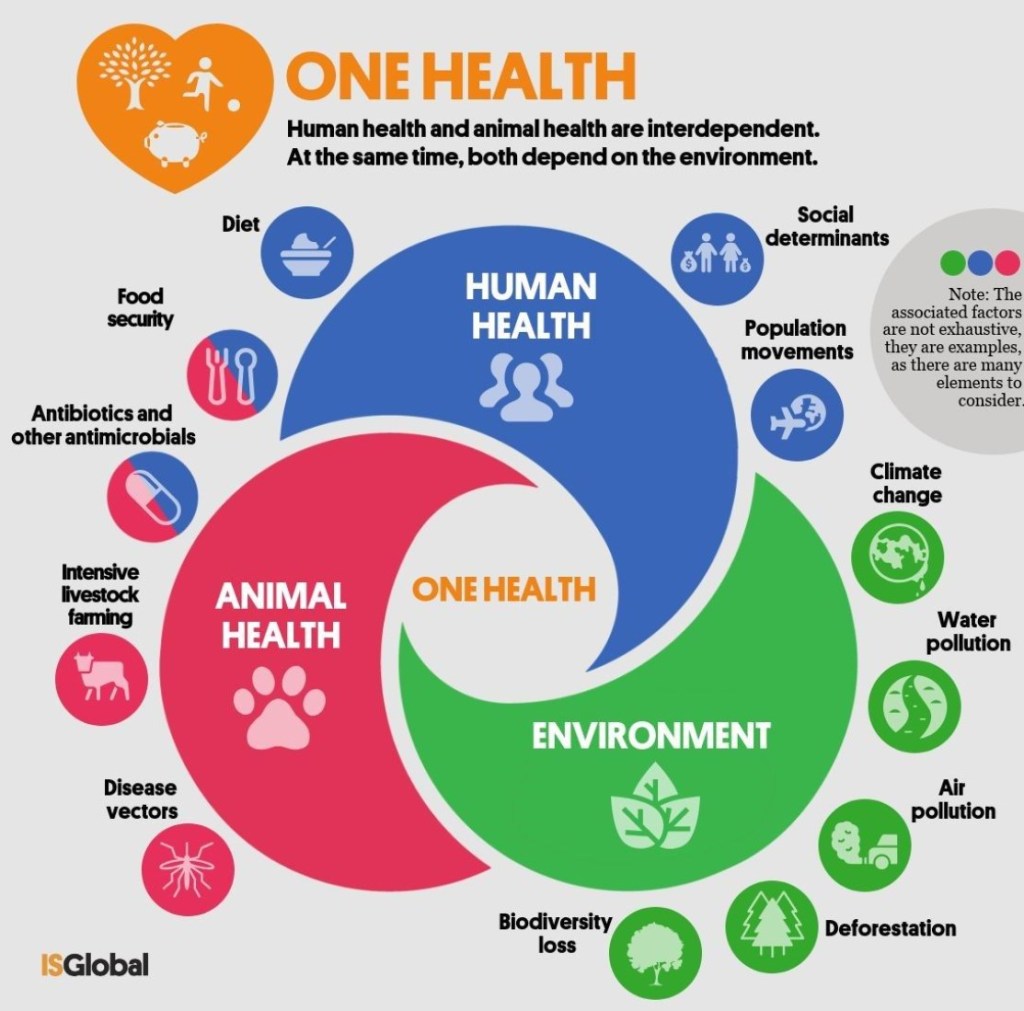
Compared to the measures to combat the coronavirus pandemic, the One Health approach is much broader in scope. It requires intersectoral cooperation at both national and international level and requires coordinated governance structures from the healthcare, veterinary, agricultural, food production, environmental and other sectors that enable different authorities and organizations to work together effectively. Globalization of governance structures must ensure that international guidelines and standards are harmonized and effectively implemented.
The knowledge base for defining political decisions and measures is becoming much more complex and involves the integration of knowledge and methods from various scientific disciplines (epidemiology, veterinary medicine, agricultural, food, nutritional and social sciences, etc.).
The integration of environmental health into health strategies requires governance to make environmental sustainability a central component of health strategies.
The focus is on prevention rather than reaction. This changes governance by focusing resources and strategies more on prevention and early warning systems. This includes the monitoring of animal and environmental health and the implementation of early warning systems in these sectors to identify potential health risks to humans at an early stage.
The implementation of the One Health approach requires the adaptation and development of new regulatory frameworks that take into account the interfaces between human, animal and environmental health. Governments must enact new laws and regulations that support these integrative approaches to health and ensure that all relevant sectors work together effectively.
The One Health approach will rely more heavily on smart governance than the coronavirus policy. This is because it requires a comprehensive, preventive and intersectoral approach. Key components are the continuous collection and analysis of data, the integration of different governance structures and the use of modern technologies for monitoring and prevention. These aspects are particularly important in the One Health approach as it moves from a reactive crisis response to a more integrated and preventative governance model.
The One Health approach thus offers a broader perspective and comprehensive tools for policy makers to respond to health crises (human/animal/environment) and take emergency measures where necessary. By emphasizing preventive measures, coordinated responses and international cooperation, the approach helps to strengthen resilience to health risks and minimize the impact of crises on society.
Summary:
„Dangerous epidemics or pandemics therefore have the potential” to intensify the biopolitical transformation of society and „the governmentalization of the modern state described by Foucault by taking measures that clearly go beyond epidemiologically indicated protective measures with the aim of containing the spread of epidemic diseases”.
[Die Covid-19-Pandemie aus biopolitischer Perspektive nach Foucault, p. 233]
In his work, Foucault emphasizes that „the transformations of power that develop and solidify in extreme situations” such as epidemics or pandemics „are not to be regarded as exceptional cases”, „but as the birth and enactment of new universally valid conditions that continue to apply even after the epidemic”. It is about the emergence and consolidation of the new power paradigm and its normalization.
[Foucault: In der Seuche die Disziplinarmacht]
The One Health approach can be seen as an evolution of crisis management, which, through its comprehensive, preventive, and technology-supported nature, forms the basis for the legitimization and lasting implementation of Smart Governance.
4. The Technological Pillars of Smart Governance
In the quest for a simple explanation of the fundamental tools of Smart Governance, one inevitably encounters a statement by Nandan Nilekani, CEO of Infosys Technologies:
„What are the tools of the new world? Everyone should have a digital ID; everyone should have a bank account; everyone should have a smartphone. Then you can do everything. Everything else builds on that.“
Nandan Nilekani
It is worth taking a closer look at the individual elements of his statement.
4.1. The European Digital ID
In February 2024, the European Parliament adopted the eIDAS reform (electronic IDentification, Authentication, and trust Services) by a large majority. By fall 2026, all EU member states must offer their citizens a „European Digital Identity Wallet” (ID wallet). This wallet makes it possible to identify oneself both online and offline in almost all areas of life. The EU Commission is aiming for at least 80% of EU citizens to use a digital identity by 2030.
A promotional video from the European Parliament explains that the EU ID Wallet securely stores important information such as official ID cards, documents and bank details in one place. The EU’s digital wallet is designed to make access to public and private services across Europe easier and more efficient. Use of the wallet is voluntary and free of charge. Citizens who decide not to use the digital wallet should not suffer any disadvantages. Wallet users can determine exactly which data is passed on to „trusted parties”. These parties, such as companies or public institutions, must register in the EU member states and specify which data they are requesting and for what purpose.
According to the motto „Trust no politician”, it makes sense to find out about the specific technological implementation of digital identity. In doing so, you quickly come across the French high-tech company THALES, which plays a key role in many state digital projects at government level worldwide.
THALES Group, based in Paris, is a listed company specializing in the following business areas: Defense Industry, Aerospace Technology and Digital Identity and Security. In the field of digital identity and security, THALES has core competencies in the technology segments of biometrics, data security and encryption.
Several large-scale pilot projects will run until 2025 to test the EU digital identity wallet and ensure its secure and smooth roll-out. Around 360 entities are involved in these projects, including private companies and public authorities from 26 Member States as well as Norway, Iceland and Ukraine. Each pilot project is organized as a consortium and brings together expertise from the public and private sectors within the EU. The pilot projects test the EU wallet in various everyday scenarios that Europeans encounter on a daily basis. They also collect feedback on the wallet’s reference implementation. The knowledge gained will be used to improve the security, interoperability and overall design of the EU Digital Identity Wallet.
Under the link eIDAS 2: the countdown to a single European Digital ID Wallet has begun we read:
„Here at Thales, we are ideally positioned to support the key stakeholders responsible for making the EUDI Wallet a reality. As a global leader in trusted digital identity schemes, our teams have worked with governments, public services, and enterprises on eIDAS since its first iteration in 2014.
As a result, we have a range of proven, eIDAS-certified solutions. Now, we partner with dozens of clients across Europe, helping them prepare for eIDAS 2.
Our technology and expertise support the EU and its member states, accelerate the deployment and adoption of the wallet, and help to put greater convenience and security in the hands of millions of EU citizens.“
This promotional video briefly and concisely explains how the eIDAS-certified „Digital ID Wallet” system solution from THALES works in practice.
What is this advertisement subtly trying to convey to us?
We meet the young, attractive woman called Lucy. The name Lucy is often associated with the 2014 action and science fiction film of the same name. In this fictionalized story, 25-year-old student Lucy drastically increases her brain power through a high dose of a drug and begins to use an ever-increasing portion of her „brain capacity”. When she finally reaches 100%, her body merges with all the equipment in a scientific laboratory to form an advanced supercomputer. Lucy travels back in time to the beginnings of the universe and meets her namesake Lucy, who lived around 3.2 million years ago and is often regarded as the link between apes and humans in human evolution.
The choice of this name is intended to appeal to viewers by evoking the idea of enhanced capabilities as well as transformative and ground-breaking features. This emphasizes the uniqueness and innovative nature of the advertised product to attract their attention.
Lucy is also a psychology student. Psychology, also known as the science of the soul, is an empirical science that focuses on describing and explaining human experience and behavior. Psychologists study the experiences, behaviors, and consciousness of people. By highlighting this, the advertisement aims to suggest to the viewer that this „evolutionary” technology is trustworthy.
The Digital Wallet delivers a clear statement right from the start:
„In fact I am a handy way of proving and protecting her identity, both online and face to face. Let us have a closer look at what I can do. I can help governments to better communicate with citizens. Right now I am reminding Lucy of the appointment she needs to schedule for her mandatory vaccination.“
The individual is quickly and personally confronted with a classic biopolitical measure and discreetly reminded to adhere to the prescribed norms. The duty of a responsible citizen is to follow these norms as best as possible, correct abnormal behavior, and ideally avoid it altogether.
In other words, the Digital ID Wallet demonstrates that it is an efficient and cost-effective tool for the government to inform us promptly about regulatory mechanisms (norms) and remind us to comply with them. An example of this is the mandatory vaccination. This, of course, assumes that the government is well-informed about our electronic health records. This will soon be ensured by the so-called Health Digital Agency Act (GDAG).
The German Health Minister Karl Lauterbach summarizes the draft law in his X-post as follows:

Back in 2020, the THALES promotional film illustrated the connection between the digital ID wallet and the electronic patient record when visiting the doctor. This seems to be pioneering for some government measures in 2024.
The digital wallet also controls communication with all state authorities and enables access to financial and mobility services. The digital ID wallet is not only used for access to the state exam, but also for access to the pub.
„Yes, I am Lucy´s best companion. I protect her identity and official credentials wherever she goes. I provide secured access to public and private services and allow her to have full control over her data privacy. In other words, I give the right access to the right data to the right person. I am also trusted by governments to best support countries digital transformation.“
For the viewer, the Digital ID Wallet appears as the digital form of the „‘good shepherd’, whose task it is to ‘do good to those over whom one watches’”.
In combination with the European Digital Identity, the smartphone is transformed into a specific, technical instrument for implementing government techniques to monitor and control both collectives and individuals. This implementation has two dimensions:
a) political dimension
Defined security and precautionary rules function as a control mechanism for the population, aiming to detect dangers and exert influence as broadly as possible on the behaviors of population and free (collective) subjects. For instance, in addition to pandemics, climate change is increasingly being defined as a risk situation.
b) entrepreneurial-economic dimension
The smartphone has become an everyday companion and generates countless amounts of data. Companies use this data to predict aspects such as purchasing behavior and lifestyle habits. They use comprehensive measures to influence the lives of both the population and individuals.
The political dimension of surveillance and control is ‚visible‘. It is usually carried out in a „hard Go-NoGo” manner. In the event of non-compliance with the specified standards, consequences follow immediately (from exclusion to more far-reaching disciplinary measures). Roughly speaking, by using the Digital ID Wallet and its associated access to biometric data, one is fraud-proof transparent! And if one doesn’t meet the norms set by the ‚good shepherd‘, one could end up naked when the going gets tough. This brings back memories for some critics of the government’s coronavirus policy.
The entrepreneurial-economic dimension operates in a more subtle, ‚invisible,‘ and discreet manner. It promotes ideals and norms, focusing on encouraging those who adhere to these norms.
THALES has also created a suitable promotional video for this dimension entitled „Trusted digital lives”.
The promotional story suggests limitless fun and convenience when digitizing one’s life. The key to this paradise is the digital capture of biometric data and its constant connection to one’s movement and behavior profile.
According to the logic of Michel Foucault, the inventor of the terms ‚biopolitics‘ and ‚governmentality‘, the goal, in addition to maintaining/establishing a global state of equilibrium, is the security of the whole and its protection from internal dangers. As the population is diverse, it is a matter of recognizing the dangers on the one hand and finding a form of government that is so far-reaching that it is effective even in the most hidden corners of the population on the other. „To govern the population is to govern its global findings; to govern the population is to govern it in depth, in subtlety and in detail.“
[The (in)visible ‚friend‘, p. 31]
The establishment of a culture where the smartphone is used as an extension of one’s own person opens up entirely new possibilities for the organization and management of societies. With the introduction of the European Digital Identity, each individual can be securely identified and addressed in digital systems. This reduces our behavior to logical-mathematical processes, which are continuously optimized based on the data collected.
4.2. Technological Self-management as the Foundation of Smart Governance
„It is so easy to be immature. If I have a book to serve as my understanding, a pastor to serve as my conscience, a physician to determine my diet for me, and so on, I need not exert myself at all. I need not think, if only I can pay: others will readily undertake the irksome work for me.“
Immanuel Kant (1724 – 1804), German Philosopher
It was predicted 10 years ago that the era of personal computing, represented by desktop computers and laptops, would give way to the era of intimate computing. It was predicted that even before 2020, „intimate devices”, environments and networks would know a great deal about us.
A vivid example of this development is the Humane AI PIN from Humane, a start-up company founded by former Apple employees that now receives support from prominent investors such as Sam Altman, Microsoft, Qualcomm Ventures and other well-known investors.
This innovative gadget caused a global stir just days after its announcement in the media and is already being hailed as the next „game changer” after the smartphone.
At first glance, the advertising for the Humane AI PIN seems very convincing.
The era of intimate computing has now become a reality, as Imran Chaudhri, CEO of Humane, explained in his visionary speech „The Disappearing Computer” during the TED conference in April 2023. It is worth watching this speech in full.
Let’s take a look at some of the statements made by the Californian visionary:
„In the future, technology will be both ambient (i.e. adapted to the environment) and contextual (i.e. adapted to the situation). And that means you need to use AI to really understand yourself and your environment to get the best results.“
„And we gain this context through machine learning. The more you use our AI-powered device, the better WE can help you in any emergency situation. Your AI effectively becomes a constantly evolving, personalized form of memory. And WE think that’s great.“
„Your AI finds out what you need at the speed of thought. A feeling that will continue to evolve as technology advances. … As AI advances, WE will see it change almost every aspect of our lives. In ways that seem unimaginable right now. In fact, Sam Altman of OpenAI feels the same way we do – AI is vastly underestimated. And I’ll add, as long as WE get it right. WE truly believe that WE are just beginning to scratch the surface of what is possible.“
„More human, more intuitive interactions that are screenless, seamless and tangible – that is the possibility of rethinking the human-technology relationship as WE know it. And that’s the exciting thing. It is undoubtedly a great challenge. But it is the world WE want to live in. A world where technology not only helps us get back into the world, but also enhances our ability to do so. It is within reach.“
„In the future, the technology could be almost invisible.“
These statements reflect the principles of neoliberal governmentality by emphasizing the individual’s responsibility to use and adapt to new technologies, promoting a culture of constant self-improvement and presenting technological control as a means of regulating and optimizing life. New norms and values are created through technological innovation. In this world, technology is not only useful but also enhances human capabilities, setting new standards for performance and efficiency.
Neoliberal governmentality relies on digital surveillance. Without the data generated by digital surveillance, the system would collapse; they are its raw material and currency. Innovative gadgets, such as the Humane AI PIN, present themselves as efficient tools in efforts to discipline, control, and optimize the postmodern individual. They focus their attention on the individual with all its desires, ambitions, potentials, and weaknesses. It appears as though they are available to the individual to assist in becoming an improved and more successful self.
In this process, the subtly deployed „Technologies of the Self”, as defined by Foucault, come into play. These are processes and practices that enable individuals, either independently or with the support of others, to carry out a variety of operations on their body, soul, thinking, behavior, and way of life.
According to Foucault, the „Technologies of the Self” always require a relationship to the other: „One cannot deal with oneself without having a relationship to the other.” [Foucault, Michel: Die Regierung des Selbst und der anderen. Vorlesung am Collège de France 1982/83. Frankfurt/Main: Suhrkamp, 2009]
The function of the Other is to speak the truth, especially unpleasant truths, which should encourage the subject to reflect on their actions and modify them if necessary.
The following dialog sequence between the CEO of Humane and the artificial intelligence illustrates the practical application of these power techniques.
Above all, the technologies of the self are based on the subject’s free decision to work on himself and, by confessing his „sins” or „mistakes”, to open himself up to spiritual guidance and then to receive instructions or teachings.
In Foucault’s philosophy of power, the subjugated subject and the autonomous self are two sides of the same phenomenon. When dealing with wearables in the context of the omnipresent data economy, the modern indifferent subject comes to the fore. On the one hand, it acts autonomously, actively and creatively and is aware of the risks and dangers of data mining. On the other hand, it bows to the principles of data production and takes no care to protect its own privacy. In this way, postmodern (supposed) concern for oneself results in self-neglect.
The subject-object of self-measurement through wearables does not surrender out of cowardice (without fear of action or decisions) but due to convenience, disinterest, and a misguided assessment (‚I have nothing to hide‘) of its immaturity. Submission to the regime of self-optimization relieves the subject from independent thinking and self-care. It continuously receives user-friendly feedback and a preconceived interpretation of itself, freeing it from the obligation to reflect and contemplate. Self-awareness through data shapes a data-dependent subject – one that admits to being unable or unwilling to independently think about itself without wearables, delegating this form of self-work to a medium. In doing so, the subject becomes alienated from itself, especially from its own body, which becomes a foreign object translated into data streams. Despite the claim to enlightenment and supposed emancipation, this results in a flexibilized, self-marketing, fundamentally indifferent subject trapped in the subtle entanglements of digital pastoral power.
Smartphones and wearables are becoming personal laboratories and promise to empower us all. These devices are evolving into advisors: they not only monitor our activities, but also give specific instructions and recommendations. The design of wearables influences our decisions, often unconsciously, by presenting different options. Users are guided towards certain behaviors through targeted nudging. In this way, wearables contribute to social control and convey general norms.
Seen in this light, the visionary speech by Imran Chaudhri, the CEO of Humane, takes on a different perspective.
The Israeli historian, Yuval Harari, gets more specific in this regard. During his ‚pathetic‘ appearance at the Frontiers Forum in May 2023 on the topic „AI and the future of humanity“, he outlines the following vision of the future:
„But the longer we talk to the bot, the better it gets to know us and understands how to refine its messages to manipulate our political views or our economic views or anything else. As I said, by mastering language, AI can build intimate relationships with humans and use the power of intimacy to influence our opinions.“
„New AI tools would have an immense impact on human opinions and our view of the world. For example, people could come to use a single AI advisor as the one-stop oracle and source of all the information they need.“
„People and companies that control the new AI oracles will be extremely powerful.“
Technological self-management and smart governance reinforce each other by using common principles and technologies to optimize both individual behavior and the management and governance of societies. Both concepts promote efficiency, transparency and personalized interactions through data-based decision making and behavior-guiding techniques. This symbiosis enables targeted changes on an individual and societal level.
Smart governance promotes the decentralization and privatization of public services. Technological solutions that enable more efficient management of public services are often provided by private actors. This takes place within the framework of public-private partnerships or through the direct outsourcing of services to private companies.
4.3. Digital Twins as the Basis for Smart Governance Strategies
What would you do if you had a digital copy of yourself? A digital twin that is just like you and lives in an exact digital representation of your home, workplace or city? Even better, what if this digital twin couldn’t feel pain or injury? The possibilities would be incredible. You could make decisions without fear of the consequences and with much more certainty about the outcome.
The management consultancy McKinsey describes the term „digital twin” as follows:
„A digital twin is a digital representation of a physical object, person, or process, contextualized in a digital version of its environment. Digital twins can help an organization simulate real situations and their outcomes, ultimately allowing it to make better decisions.“
Is it already possible to create a virtual copy of an entire city? Yes, this is already feasible. The Siemensstadt Square project is just one example of this.
Digital twins act as a central platform for integrating and coordinating various smart technologies. They bundle data from IoT devices, sensors and other digital systems to create a comprehensive picture of the urban environment. This allows planners to test different scenarios and measure their results without affecting the city and its residents. Working solutions can then be implemented in the physical space.
Digital twins are an indispensable tool for smart governance, as they offer numerous advantages and can significantly improve the efficiency and effectiveness of administration. This technology enables precise real-time data analysis and the simulation of various scenarios. As a result, potential problems can be identified at an early stage and suitable measures planned before they manifest themselves in the real world. The possible applications are diverse: from monitoring and maintaining infrastructure to analyzing environmental data and social dynamics to crisis management in the event of natural disasters or pandemics.
Digital twins are detailed replicas of systems that are designed for a two-way flow of information with the real object. They enable a bidirectional exchange of real-time data and contribute to a better understanding of what is currently happening. This allows problems to be resolved in real time and the performance of the real object to be optimized.
If a digital twin can successfully emulate an entire district, could it then be extended to the individual level to function as a personal digital twin?
Many experts are convinced that this vision is achievable, and indeed, some of them are already working on highly ambitious applications. The assessment suggests that personal digital twins could become an everyday reality by the end of the decade – with significant impetus coming from the healthcare sector.
Former CEO of General Electric, Bill Ruh, for instance, predicts that every person will be equipped with a digital twin from birth. This digital twin will leverage the individual’s genome to provide personalized treatment recommendations as soon as diseases occur.
The fact that the Personal Digital Twin is more than just a vision is demonstrated by the circumstance that in 2020, the European Commission’s Joint Research Center (JRC) launched the project „MyDigitalTwin: Trusted Personal Digital Twins in a Transformed Society”. The information available on the Internet about this project is sparse. This link provides the following general information:

„MyDigitalTwin (MyDT) project aims to study how to utilize, supervise, and control the rapidly growing generation of personal data via PDTs, and PDT role in understanding complex/fast societal dynamics. The study wants to explore the challenges related to ethics and privacy, and the opportunities to move the existing PDT frameworks from a Business–to–Customer (B2C) to a Government–to–Citizen (G2C) context. Finally, MyDT will consider the PDT role for a European e–Identity.“
Further information on the EU Commission’s MyDigitalTwin (MyDT) project can be found in the eBook by Prof. Roberto Saracco entitled „Personal Digital Twins – A third evolution step of humankind?”. Prof. Saracco is not only one of the chairs of the IEEE Digital Reality Initiative, but also an active participant in the expert working group of the MyDT project.
To what extent should the PDT reflect the physical person?
This essentially depends on what is expected from the PDT. Currently, the use of PDTs is advocated in healthcare. A PDT designed for such a purpose would reflect physiological aspects of the person with a multitude of details (weight, height, gender, heartbeats, respiratory rate, metabolism, etc.) and may encompass various other health-related data (genome sequence, allergies, living environment, parental pathologies, occupational risks, etc.).
This promotional video „Forward CarePod™, the World’s First AI Doctor’s Office” by the US company GoForward demonstrates how quickly this can now be implemented in practice.
Google recently unveiled MedLM, a series of specialized generative AI models for the healthcare sector. According to Google, the performance of these AI models is equivalent to that of a medical specialist.
With the promise of personal 360-degree comprehensive health protection around the clock, 365 days a year, the majority of the population will voluntarily take the first step towards a Personal Digital Twin (PDT).
A large amount of personal data sets are obviously crucial for the operation of the PDT; a PDT without data does not exist. The article „The last bastion – The human body as a technology platform” provides an up-to-date overview of how this data is collected and processed technologically.
In this constellation, the basis of trust between the natural person and the institution that collects and manages the personal data records is essential.
For this reason, the European Union (EU) has introduced regulations such as the General Data Protection Regulation (GDPR) and the ‚EU Data Act.‘ While the ‚EU Data Act‘ aims to make more data available for societal and economic purposes, the GDPR focuses on the protection of personal data and the rights of individuals. These regulations address different needs: data protection and confidentiality on one hand, and data use and sharing on the other.
This creates potential conflict. A harmonious alignment of the requirements of both regulations requires careful consideration to ensure that the objectives of the free flow of data and data protection are reconciled. And that is a real challenge for smart governance.
Let us remember that biopolitics, as a central aspect of governmentality, manages the lives of the entire population through state and other institutions in all its facets. During a pandemic, the disease is no longer seen as an individual problem, but as a challenge that affects the entire community.
How Personal Digital Twins can be used in combating a pandemic and how personal data is handled is simply explained by Prof. Saracco in this video excerpt.
In this scenario, the PDT exchanges health-related data with the physical person and with the health authorities, aka the state authority. The state authority determines how the respective data should be handled in the context of the current pandemic and what consequences this has for the physical person. Typically, certain behavioral rules are mandated by the state. As long as the physical person adheres to these rules, they remain „anonymous”, i.e. their privacy is respected. „Anonymity” disappears when the person does not adhere to the state-defined rules (there is an intrusion into privacy). In this constellation, the physical person is monitored 24/7 with the help of the PDT and conditioned if necessary.
The ambitions to reflect a physical person through PDTs extend far beyond the healthcare sector. How far can and should one go?
The discussions within the framework of the EU Commission’s MyDT project are primarily guided by the already available and growing „data landscape” of the physical person.
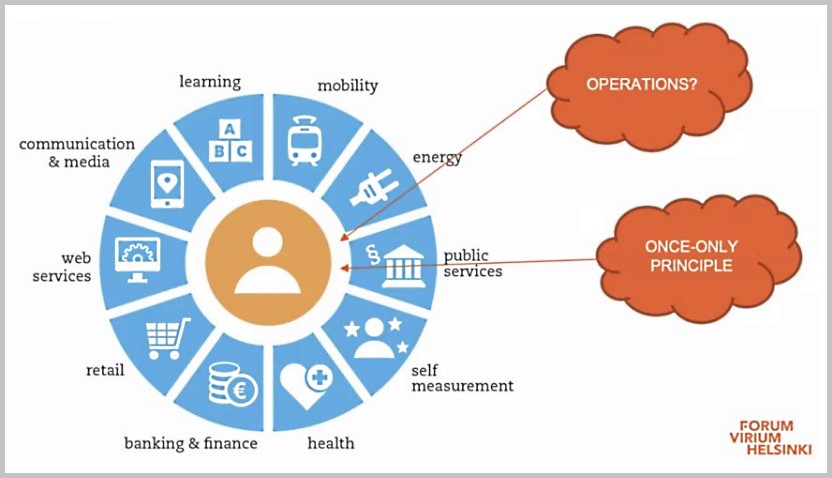
[Forum Virium Helsinki]
Note that only a small portion of the data is generated and captured by the person themselves (self-measurement). Most data is generated through the person’s interaction with their environment and is collected by various institutions. The functioning of this process has already been illustrated in chapters 4.1 and 4.2.
The extent to which the resulting digital footprint is used for creating a personal digital twin depends on the complexity of the analysis methods applied to existing datasets. With the help of AI models, today we have reached the point where a comprehensive profile of our person is silently created in the background across almost all domains. This profile can be used to predict future needs and/or to stimulate or control these needs. This growing sophistication in analyzing and managing personal data sets brings us ever closer to the concept of a digital twin. It is a „personal” digital twin in the sense that it reflects who we are (habits, history, future behavior), but it is not „personal” in the sense that it belongs to me – I basically have no control over this pseudo digital twin.
An analysis of the EU AI-ACT (EU regulation establishing harmonized rules for artificial intelligence) shows that the EU Commission is planning the use of so-called high-risk AI systems in almost all areas of life. These systems are intended to closely monitor, review and evaluate the actions of each individual using AI. Ultimately, an individual’s ‚fate‘, including education, career development, access to services and financial resources, freedom of movement, legal protection and criminal prosecution, could be more or less influenced by these systems.
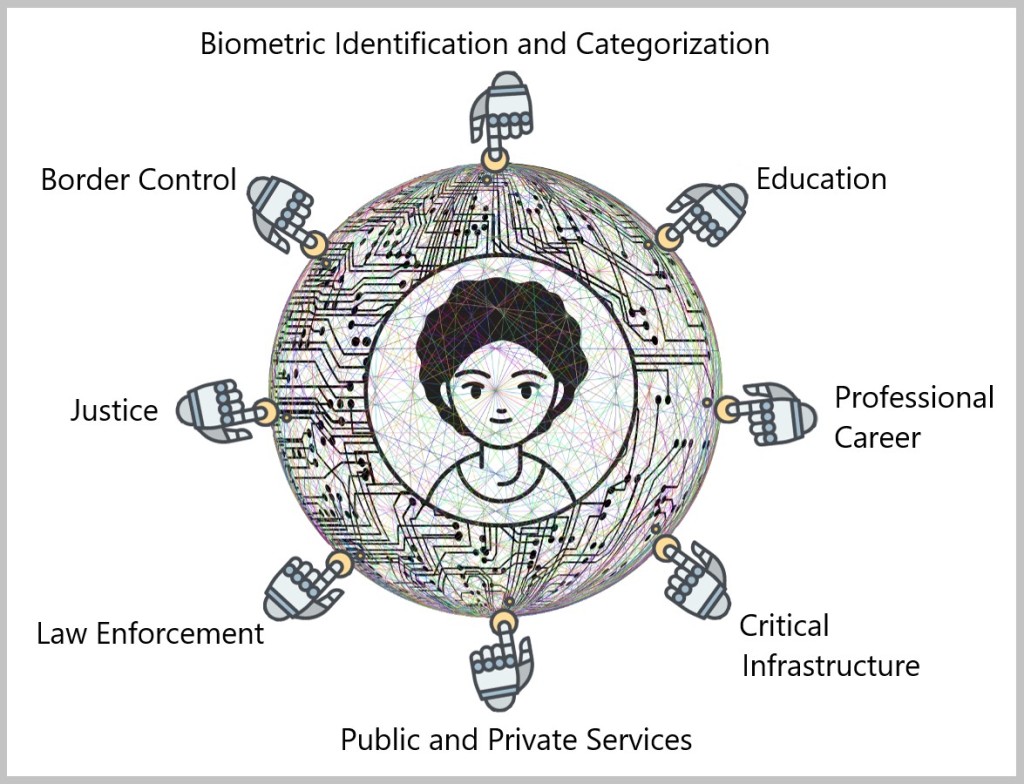
This should answer the question, „How far can and should one go?”.
According to Prof. Roberto Saracco, the expert group of the MyDT project has a broad range of applications in mind. There is consensus that a European initiative can promote the acceptance and dissemination of PDTs, supporting their use as part of the Internet of People (IoP) in healthcare, including the monitoring and control of epidemics. This sector is intended to pave the way for applications in smart cities, e-government, and so on.
Through public-private partnerships, smart governance promotes the development of an ecosystem in which private companies establish a culture that requires the use of smartphones and wearables as a fundamental tool. These companies offer services via personal digital twins and encourage other companies to offer similar services via a personal digital twin.
On the one hand, this development means that there may be many different Personal Digital Twins (PDTs), which can potentially cause confusion. On the other hand, this could motivate companies to offer an integrated PDT that combines existing, sector-specific PDTs for individuals.
Professor Saracco expresses his views on the matter as follows:
„I do not have a crystal ball, but if I had to make a prediction, I think that the evolution will be bottom up rather than top down. It is unlikely that an institution (like the EU) will dictate and steer the evolution of PDTs. It is much more likely that several companies will offer services that result in the creation/adoption of PDTs of people. Other companies will provide tools to integrate fragmented PDTs into a single entity that can be compliant with a general framework (this one could well be the result of work at an international standardization level) that can have some characteristics regulated by a body such as the EU.“ [Personal Digital Twins]
It is anticipated that over time, the numerous Personal Digital Twins (PDTs) created to represent specific aspects of an individual will eventually merge into a single aggregated PDT. Professor Saracco predicts that within the next ten years and beyond, every person will have a personal digital twin. This Personal Digital Twin will be ‚born‘ during pregnancy through data collected from the mother’s medical examinations and will evolve throughout the person’s life. The PDT will represent the entire digital personality and can be used to share data at specific times, but only with pre-authorized institutions that have permission and a legitimate need for access, always under the control of the physical person.
Let’s recall that the digital twin is designed for a reciprocal flow of information with the object being emulated. It involves a bidirectional exchange of data. The digital twin can be seen as an interface between the physical person and various AI systems, which are operated or controlled by private or public institutions. On one hand, the data collected to generate PDTs are also used for training and further development of AI systems. On the other hand, AI systems can provide personalized recommendations, assistance, or even predictions based on the digital representation of an individual, analyzing and processing his unique characteristics and behaviors.
In crisis situations, PDTs can contribute to both „passive monitoring” and „active conditioning” of the physical person. An example of this was clearly illustrated in the video by Prof. Saracco. Once the infrastructure is established, it can be promptly adapted to the specific crisis situation, including all resulting restrictions and consequences for the individual. Let’s not forget that the next decade is full of global risks.
4.4. Intelligent Money – Smart Money and Smart Governance
Advancing global networking through technologies such as 5G and the Internet of Things (IoT), supported by powerful AI algorithms, is driving the development of the so-called ’smart economy‘. This refers to an economy that is becoming more efficient, sustainable and innovative thanks to digital technologies and data-driven processes. Key technologies such as the Internet of Things, artificial intelligence, big data and blockchain play a central role in this by helping companies to optimize processes, make their production more efficient, reduce energy consumption, make better use of their resources, develop new business models and respond better to customer needs.
In a smart economy, data is continuously collected and analyzed in order to make informed decisions. Networking with the financial sector plays a crucial role in this. This connection makes it possible to make financial transactions more efficient, secure and transparent. The seamless integration of financial services into the digital economy places new demands on the digital form of money and inevitably leads to its further development.
In the context of this evolutionary development, digital currencies will offer expanded functions that go beyond the simple roles of payment and value storage associated with traditional currencies. This is referred to as the ‚tokenized‘ form of money. Detailed and comprehensive information on this topic can be found in the article CBDC – A Love Story with Reservations.
At this point, it is sufficient to say that „tokenization” refers to the process of transferring assets from the real world into the digital world by converting them into digital tokens. These tokens act as digital representations of real assets and are stored in a database.
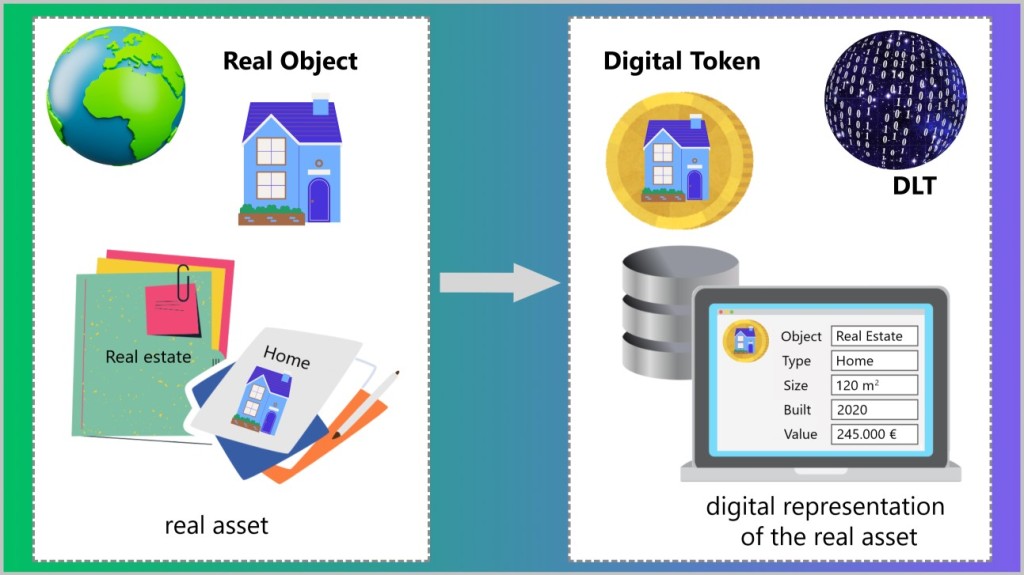
An asset is an economic value or resource that provides a company, person or organization with a benefit or entitlement to future benefits. These can include tangible assets (land, buildings, machinery, vehicles, equipment, inventory), intangible assets (patents, licenses, copyrights, software), natural assets (land, water, natural resources) and financial assets (cash, bank balances, shares and other financial instruments).
The database, also known as a ledger, is used to record the current status of assets, liabilities and capital of a company or organization. Traditionally, a central authority has control over the data and controls access centrally. In a smart economy, a decentralized database, also known as a distributed ledger, is increasingly being used. In contrast to centralized ledgers, which are managed by a single central authority, the data in a distributed ledger is located on many distributed nodes or computers that are connected to each other via a network. This decentralized nature ensures greater security as the data is stored on multiple nodes and changes are cryptographically secured. Blockchain is a specific technological implementation of a distributed ledger.
A token, in addition to containing information about the asset (e.g., unique identification, owner, custodian, origin, value, etc.), also includes rules that define what the asset can and cannot do.
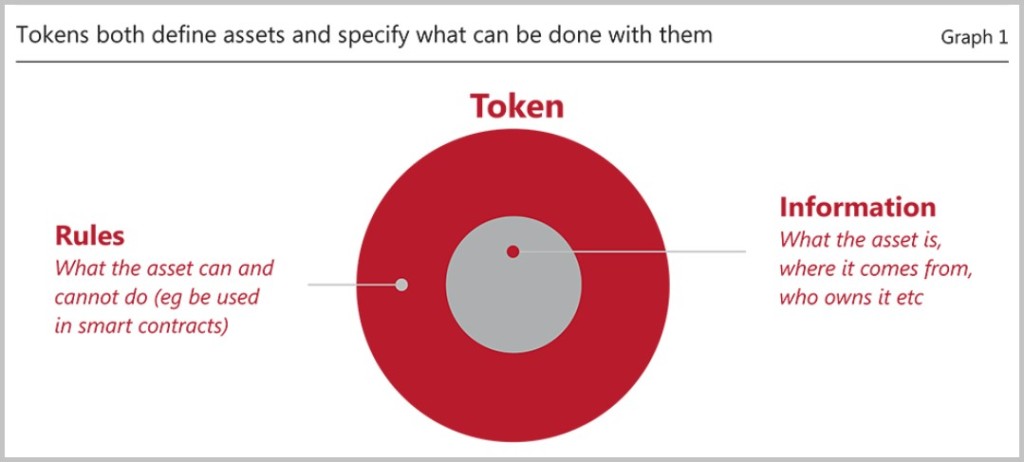
This makes it easier to integrate the tokens into so-called intelligent contracts, also known as smart contracts. A smart contract is a software program that represents a self-executing contract whose conditions are contained directly in the code. These codes run on a blockchain and automatically execute actions when predefined conditions are met, without the need for an intermediate instance.
A smart contract covers all key aspects of a contract: from identifying the parties involved and the subject matter to the services, obligations, conditions, and duration, as well as management and enforcement. A smart contract is absolutely precise. It follows the pre-programmed logic down to the finest detail and is executed deterministically. This logic defines how the tokens operate and what rules they must adhere to.
In the new monetary system, all currently available forms of money will have a digital twin.

In this technological construct, all money transactions can not only be clearly identified and tracked, but also integrated into complex, automated processes. In addition to payment transactions, even money functions can be programmed, which is known as „Smart Money”. The traditional wallet in which cash and cards are stored is transformed into a Digital Wallet – an app on a smartphone or computer that enables users to store their digital tokens, send and receive money, make purchases and manage their transactions.
The advantages of the new forms of money cannot be denied. By integrating them into smart contracts, transactions can be processed faster and more cost-effectively than conventional bank transfers, which often take several days. In a smart economy, the flows of goods, money and information can be automated and synchronized, which leads to a further increase in efficiency.
The transparency and traceability of transactions carried out on a blockchain reduces the risk of fraud and facilitates regulatory compliance. Another advantage of smart money is financial inclusion, as it can improve access to financial services for people who were previously excluded from the traditional banking system, which is particularly beneficial in developing countries.
Interoperability is another important factor. Tokenized money can be used in different digital ecosystems and enables seamless integration with other digital services and platforms. Finally, these digital currencies offer a high level of security against cyberattacks and manipulation through the use of advanced encryption techniques and decentralized networks.
The resulting intelligent and flexible financial instruments can not only significantly enhance the impact of Smart Governance on citizens‘ lives but also deepen it.
Transactions between the government and citizens, both Government-to-Citizen and Citizen-to-Government, open up entirely new perspectives. Governments can ensure that public funds reach their intended destinations directly and without delay. Citizens can gain faster and more secure access to social benefits, pensions, or subsidies. In the tax system, Smart Money demonstrates its advantages by enabling automatic and real-time tax payments. This reduces administrative burdens, minimizes errors, and enhances the efficiency of the tax system. Automated tax payments simplify and make the process more transparent, which can promote tax compliance.
The combination of Digital ID, smartphone, and Digital Wallet facilitates access to financial services for individuals without bank accounts or with limited access to traditional financial institutions. This financial inclusion not only promotes economic participation and helps reduce social inequalities but also maximizes the reach of Smart Governance, ensuring its effectiveness extends to even the most hidden corners of the population.
Smart money facilitates the more effective implementation of specific political agendas, such as promoting sustainable development. Governments can encourage environmentally friendly behavior and sustainable investments by utilizing digital currencies and smart contracts to efficiently manage environmental subsidies and tax incentives.
As described in the article CBDC – A Love Story with Reservations, the tokenized form of money forms the technological foundation for numerous new and innovative financial services in the private industry and financial sector. With increasingly advanced technologies based on AI algorithms, cities are transforming into ‚Smart Cities,‘ buildings into ‚Smart Buildings‘ or ‚Smart Homes,‘ and cars into ‚Smart Cars.‘ This extensive networking allows for the extraction and processing of more and more information from our daily lives into digital platforms. The motto ‚faster, further, higher‘ drives the integration of personal financial data, mobility profiles, details of living and working environments, and physical well-being into algorithmically controlled rules, which can be codified in smart contracts.
In this context, „Smart Governance” establishes the rules, transparency requirements, efficiency goals, security standards, participation mechanisms, and data protection policies that ensure smart contracts operate within a legal and regulatory framework. As a result, significant aspects of a person’s life can be indirectly influenced by „Smart Governance”.
The integration of Smart Money into Smart Governance brings numerous benefits but also significant challenges regarding control and surveillance. These aspects must be critically examined to maintain the balance between efficiency and personal freedom. Through the use of Smart Money, governments and financial institutions can track detailed transaction data in real-time. This allows for more precise monitoring of citizens‘ financial behavior, as every transaction can be traced and analyzed. A rather striking comment on this matter comes from Augustin Carstens, the General Manager of the Bank for International Settlements (BIS):
Smart money gives governments the ability to control financial activities. Payments for certain goods and services could be restricted or blocked in order to combat illegal activities or regulate politically undesirable behavior.
The storage and processing of large amounts of personal financial data entails considerable data protection risks. In authoritarian regimes, there is a risk that smart money could be misused as a tool for political repression. Governments could impose financial sanctions on political opponents or restrict access to financial resources for certain population groups.
To alleviate concerns about government surveillance, it is the task of the authorities to reassure the public that appropriate regulations and controls are in place. In this context, international organizations such as the OECD play an important role. The OECD document entitled „Central Bank Digital Currencies (CBDCs) and democratic values” contains some relevant statements on this topic.
„One of the risks posed by CBDCs for society is their potential use as surveillance tools, given potential access to heightened levels of information about users, including transaction and account level information. At the extreme, CBDCs could give governments the ability to monitor and track all transaction and other financial activity details of users, and also the possibility to exert greater control over private transactions. Authorities could unjustly censor users and transactions without due process or recourse.
Moreover, in a scenario in which CBDCs are used for largescale control of monetary transactions, CBDCs could become an instrument of control and social profiling, biased and discriminatory treatment of users and possible human rights abuse.“
The OECD is an international organization with 38 member states that are committed to democracy and a market economy. Its members include many EU countries, the USA, Canada, the UK, Japan and Australia. The document emphasizes not only understanding the risks of introducing CBDCs, but also setting clear guidelines to ensure that democratic values are taken into account in the design and implementation of CBDCs. There are four main areas to which particular attention is paid: (i) Civil liberties and human rights; (ii) Equity: availability, accessibility and affordability; (iii) Privacy and integrity; (iv) Trust: Security, transparency, operational resilience and protection of the aforementioned values.

The OECD considers data protection as follows:
„In terms of privacy options, the lowest degree of privacy would involve a design wherein all onboarding/KYC and transaction data are visible to the central bank. The second lowest degree of privacy would involve transparency and visibility of the above data to the intermediary only. On the other end of the spectrum, no data is visible to any third party or the central bank itself, i.e., full anonymity, which is not a desirable feature, as this would make it impossible to control circulation and to prevent money laundering. It would also impede regulation and enforcement activities. Instead, a model of ‘selective privacy’ involves a higher degree of privacy for low-value / low-risk payments, involving simplified checks (e.g., specific wallet with lower requirements during onboarding). Under this model, higher-value transactions would remain subject to standard controls.“
Regardless of whether terms like „selective privacy” or „pseudonymity” are used, the complete anonymity of physical cash cannot be achieved.
„A permissioned CBDC system, where participation is managed by a trusted entity or set of trusted entities, could yield better results in terms of privacy protection of sensitive financial data: transaction history is generally only viewable by a small number of trusted entities and kept private with respect to others.“ [OECD]
In essence, a type of asymmetric privacy protection is applied. While the majority do not know the true identity of a person behind a pseudonym (e.g., public address/key), thereby maintaining privacy (e.g., private address/key), there is the possibility for a select group of individuals or institutions to uncover the true identity through specialized knowledge and access to appropriate technologies. Therefore, pseudonymity does not provide complete anonymity but grants a degree of privacy from the general public, while still allowing traceability for certain authorized parties.
This is an important point. The ability to determine the identity of a person behind a pseudonym contributes in some ways to the further concentration of knowledge and power. Individuals or organizations with the resources and technical ability to decode identity can thereby exercise increased control over the information and actions of those using pseudonyms. This can be particularly problematic if this power is in the hands of a few powerful institutions or governments, which can lead to an imbalance in terms of data protection and individual freedom.
In this sense, it is important that the use of pseudonymity in society and in technological systems is accompanied by appropriate protection mechanisms and data protection regulations in order to prevent the misuse of knowledge and power and to protect individual privacy. In most cases, governmental or regulatory institutions are responsible for establishing and enforcing data protection regulations and safeguards against data misuse. These institutions are often set up by the respective governments.
And this setup contains an implicit contradiction. The contradiction arises from the fact that the institutions responsible for protecting privacy are created by governments that simultaneously have an interest in collecting and utilizing more data. In a way, Smart Governance is the entity that has to regulate itself.
In addition to the protection of citizens‘ privacy, the programmability of tokenized forms of money is another aspect that requires special confidence-building measures. In the document „Central Bank Digital Currencies (CBDCs) and democratic values”, the OECD comments on this topic as follows:
„Although programmability could enable government or central bank-initiated programmable money that works only in certain ways, this would work against policy objectives of providing uniform CBDCs to citizens and promoting user trust. Payments programmability on the other hand, controlled by the users, could provide enhanced functionality for users to set rules on their payments. In some cases, it is envisaged that Payment Interface Providers and External Service Interface Providers could implement such programmable functionalities themselves, but they would require user consent and not be at the issuer’s direction.“
The European Central Bank (ECB) has explicitly ruled out programmable money, but is in favor of programmable payments. While programmable money represents a direct intervention in the financial freedom of citizens, as it can restrict the use of money through set rules and conditions, the impact of programmable payments is not immediately apparent. In the context of smart contracts, programmable payments can influence citizens‘ behavior in a variety of ways by enabling automated incentives, conditional payments, regulation-compliant transactions, contract management and dynamic price adjustments. These mechanisms are designed to increase efficiency and trust while subtly and indirectly controlling the behavior of participants.
Smart Money will definitely be a powerful instrument of Smart Governance in modern societies, as it improves the coordination of all market participants in line with economic and political goals.
To achieve this goal, citizens must have a high level of trust in the government and financial institutions. If they feel that their financial privacy and freedom are threatened, this could lead to resistance and rejection of the new technologies. Therefore, smart governance will take care of making citizens feel safe. It is less important whether privacy and financial freedom are actually at risk; what matters is that citizens believe their data is secure and their freedom untouched. This feeling of security and trust is therefore a key factor in the success of Smart Governance and Smart Money.
5. A Glimpse into the Future – Smart Governance at Its Best
If you are still unsure about the possible development of society under the aegis of smart governance, it is worth taking a closer look at the future vision of the „Tokenize Europe 2025” initiative. This initiative was launched by the European Commission and the Association of German Banks and is supported by the consulting firm Roland Berger as well as more than 20 member organizations from various countries and industries to advance the tokenization of Europe.
The future of Europe is described as follows:
In 2030, we no longer „go online”, because being online is an integral part of life. Technology and digital services are embedded in our daily routines, our work, our lifestyle, 24 hours a day.
A DAY IN THE LIFE OF A TOKENISED EUROPE IN 2030
07:00
It’s getting warm outside. Simon is a European citizen and has a biunique digital identity token stored in his smart watch. Simon’s digital personal trainer receives fitness data from his smart watch while he is asleep. Simon’s tokenbased digital twin always calculates the best action for him to engage in next. The trainer creates a daily plan in line with Simon’s preferences and fitness condition. Today’s plan has already been sent to all his electronic devices before the alarm rings. A micro-payment to his digital personal trainer was made automatically even before Simon woke up. Since weather data has also been sent to his smart home and has been adjusted by his local sensor, the air-conditioning is activated. Simon gets some coins for data collected from his local sensor.
07:30
Time for breakfast! The refrigerator, aware of the weather and Simon’s fitness condition, will recommend that he eats light meals today. The refrigerator knows what is stored inside it and also knows Simon’s preferences (e.g. for organic food that is digitally certified by the producer via a digital token containing all information about production, transport and delivery). By combining this information with Simon’s digital ID and payment data, the refrigerator can reorder missing foods. Simon’s grocery supplier delivers the food to his door within 20 minutes.
08:00
Simon receives a suggestion from his electric transport provider: „Simon, you shouldn’t be walking the long way to the office in hot weather conditions. We recommend using an eco-friendly carpool. Please confirm the pre-booking we have made.” In 2030, all digital identities – those of people and machines alike – are stored in digital wallets. These wallets also include digital money, driving licences, insurance policies and details of the registered address etc. – in Simon’s case all in accordance with his personal preferences and the rules he himself has pre-defined as owner of the data. The electric car, which has recharged itself at the parking space overnight, is ready and waiting for him.
08:15
To ensure an optimal distribution of cars within the city, dynamic pricing modules calculate usage fees based on location and/or nearby events. After the car key has been sent to Simon’s smartphone as a digital twin, the usage fee is calculated in addition to the dynamic price-per-kilowatt-hour based on consumption. The insurance fee is payable via a separate insurance token and depending on his driving style. Today, he received a discount, because he is also the owner of a security token from the car sharing company, and today they paid a dividend.
08:30
Simon works in the logistics department of a textile company that manufactures its products outside Europe and has a global supply chain. In the days before tokenisation, global supply chains were challenging to manage because of the many suppliers, intermediaries and public authorities involved across many different countries – complexities that came on top of non-digital/paper processes, language barriers, legal differences and time-zone differences. In combination with digital contracts and transactions, tokenisation has vastly improved the transparency, safety and efficiency of such transactions.
09:00-17:00
From his office in Berlin, Simon can track every link in the production chain. Ms. Jin picks the cotton from a field in the Huang-Huai-Hai region and the cotton is delivered to the factory by Mr. Xiao. An embedded token contains information about which workers have worked on the product and been involved in transporting it by truck to the harbour and the ship etc. This is especially useful to ensure that sustainable and ethical production and transport standards have been fulfilled every step of the way. Since the contracts with the suppliers are defined as smart contracts in a distributed ledger technology network, all payments are automated. If the contractual requirements are met, the payment will automatically be booked from the company’s wallet while Simon is enjoying a coffee at the office. After making sure everything is fine with the transaction, Simon joins his business meeting, which takes place in a metaverse application.
17:00
At the end of his working day, Simon’s digital personal trainer reminds him to attend his sports class, which is also in the metaverse. His trainer, who lives in the USA, will be waiting for him, so both can have a digitally enabled training session as if they were in the same physical place.
20:00
After working out, Simon has dinner with Zeynep. The bill for the delicious dinner is sent directly to Simon’s wallet, where he chooses the tip amount and pays in digital euros. The wallet provider – his bank – sends him a notification every time a payment or other change is made in the wallet. Furthermore, his personal electronic wallet consists not only of means of payment, but also of a variety of tokenised assets: stocks, stablecoins, exchange traded funds (ETFs) and corporate bonds. Some of his friends even own fractions of classic cars, artworks, houses and other items in the same way. This is possible because, nowadays, previously illiquid asset classes, high-priced assets and expensive transactions can be digitally acquired and processed in small fractions at almost no transaction cost.
After arriving home, Simon has a last look at the latest news broadcast in the metaverse based on his self-defined preferences. He then calls it a day.
6. Smart Resistance
Does this future vision, developed by the European Commission and the Association of German Banks, align with your expectations? Do you aspire to lead a comparable everyday life to Simon’s?
If so, congratulations! You are likely to experience an unconditional love story with a connected and cooperative environment, where public and private actors collaborate to promote a sustainable and livable society.
If this vision evokes mixed feelings for you, your relationship with the Smart Governance system may be more of a love story with reservations. Despite the perceived benefits of the new system, you may hope for the government to demonstrate a strong understanding of democracy and mitigate or at least consider the potential drawbacks of the system.
History has taught us, however, that the understanding of democracy can evolve over time. It is influenced by various factors, including societal developments, political events, cultural changes, and individual experiences. For example, technological advancements, economic conditions, or political crises can impact the perception and interpretation of democracy. Media and political discourses can contribute to shifting perceptions and expectations regarding democracy over time.
If you reject the vision, don’t forget that Michel Foucault’s theory states that power and resistance are inextricably linked. In a world increasingly shaped by technology and data, forms of resistance will also evolve. These will also use modern technologies to fight against the power structures of Smart Governance. This movement can be referred to as Smart Resistance.
Smart resistance might leverage advanced technologies such as encryption, anonymizing networks (e.g. Tor), decentralized platforms, and blockchain to protect privacy and circumvent surveillance. Activists could use social media, online petitions, and digital campaigns to raise awareness, create impact, and demand political changes. Hacker groups might uncover vulnerabilities in Smart Governance systems to expose misuse and corruption or disrupt the operation of surveillance systems. Whistleblowers within organizations could leak internal information to the public to reveal abuses and misconduct.
Legal and lobbying efforts will also play a crucial role, with groups and individuals using legal tools to challenge unfair or illegal practices and influencing political decisions through advocacy. Public education and awareness about the risks and challenges of Smart Governance will empower citizens to be better informed, think critically, and engage actively. Cultural expressions such as art and literature can provide platforms for critique and alternative perspectives. Finally, the development and use of alternative technologies, such as open-source software, decentralized social networks, and secure communication platforms, will promote greater autonomy and privacy.
Michel Foucault viewed resistance as specific struggles against the everyday practices of power, rather than a fight against the existence of power itself. Power relations are deeply embedded in societal structures and cannot be simply eradicated; they cannot be radically abolished. This means that Smart Resistance will not completely eliminate Smart Governance but rather will confirm and shape it.
Smart Resistance operates within the existing power structures, employing similar technologies and methods to combat specific abuses of power. This form of resistance questions and transforms the practices of Smart Governance, but it does not eliminate the fundamental existence of Smart Governance. Instead, Smart Resistance helps to scrutinize, balance, and potentially make these power dynamics more just and transparent. In this dynamic interplay between power and resistance, Smart Governance is not abolished but rather evolved and adapted to meet the ever-changing demands and challenges.
In simple terms, Smart Resistance can ensure that Smart Governance does not turn into „Smeart” Governance.
7. Epilogue – Is Smart Governance Truly the Only Option?
The world itself, in its physical, natural form, is analog.
Most natural phenomena are continuous rather than discrete. Temperature, light intensity, and sound waves change continuously over time and space, which is characteristic of analog signals. Physical reality consists of matter and energy in a constant flow. Objects move along continuous paths, and quantities like speed and acceleration are also continuous. Life processes such as heartbeat, neural activities, and photosynthesis are examples of analog systems in nature. Our senses also operate analogically: eyes perceive light as a continuous spectrum, ears detect sound waves continuously, and skin sensors respond to changes in temperature and pressure.
Digital technologies are based on the discretization of information, whereby analogue signals are converted into binary codes. This digitization enables precise processing, storage and transmission of data, which is beneficial in many modern applications. The digital world offers enormous advantages in terms of efficiency, accuracy and accessibility. The coexistence of analog and digital creates a hybrid reality in which we live and work. The challenge is to integrate these two worlds harmoniously in order to reap the benefits of both approaches.
Technological progress is a natural consequence of human curiosity, research and innovation. Economic incentives and competitiveness often drive these innovations, making it virtually impossible to stop technological progress. The challenge for society is to shape this progress in a way that respects and promotes people’s needs and values. This requires appropriate regulation and governance to minimize risks and ensure that new technologies are used in line with societal values.
Smart Governance is not just a reaction to technological progress, but actively uses it to achieve its goals. In the modern world, which is increasingly dominated by technology and data, it often appears as an inevitable step in the evolution of governance models.
Smart Governance is usually based on the analysis and use of large amounts of data to make decisions and optimize processes. However, this does not necessarily mean that these decisions are guided by wisdom.
„Knowledge” refers to the awareness and understanding of facts, information, and relationships. It is based on objective data and empirical evidence. In contrast, „wisdom” pertains to a deeper level of understanding and insight. It includes the ability to apply knowledge to make moral judgments, comprehend complex situations, and consider the impact of decisions on individuals and society.
Knowledge is measurable and often objective, gained through data analysis, research and experience. Wisdom, on the other hand, is more subjective and involves emotional intelligence and moral insight. While knowledge is often applied to solve practical problems and promote technological advances, wisdom focuses more on ethical guidance and the long-term impact of decisions. Knowledge can change and evolve quickly, while wisdom is developed through life experience and reflection over time. Knowledge is the result of intellectual learning and training, while wisdom is associated with maturity and an understanding of social and emotional dynamics.
Wisdom requires the ability to find balance and harmony in complex situations. It involves empathy and respect for the needs and wishes of others as well as consideration of long-term effects and consequences. Wisdom also means ensuring justice and fairness. Wise leadership recognizes that technological developments and societal needs are constantly evolving. The ability to respond flexibly to these changes while maintaining the basic principles of balance and respect is a sign of wisdom.
In terms of smart governance, this means that data and technological solutions alone are not enough to solve complex social and political problems. The integration of wisdom is crucial to ensure that decisions are made fairly, sustainably and in the best interests of society. Smart Governance should therefore not only focus on collecting and analyzing data, but also on promoting wise leadership and ethical responsibility to support harmonious and humane development.
It should recognize and respect the diversity of lifestyles by providing both digital and analog options for accessing services and participating in public life. Citizens should have the freedom to choose the extent to which they want to use digital technologies without being forced to do so. A right to analog life requires that analog systems remain accessible and user-friendly, including physical government offices and paper-based forms. Support services should be offered to help people who have difficulties with digital technologies.
The protection of privacy is particularly important, regardless of whether citizens prefer digital or analog lifestyles. Educational programs should support citizens in making informed decisions about the use of digital technologies while emphasizing the possibilities of an analog lifestyle. Legal frameworks must protect the right to an analog life and ensure that analog options are preserved in public and private services.
The coexistence of Smart Governance and the right to an analog life requires a balance between technological progress and respect for individual lifestyles. By integrating these principles, wise leadership can ensure that technological innovation benefits all without jeopardizing the diversity of human lifestyles.
Sources (as of 25.07.2024)
 Dig Deeply